You have set your goals, secured the perfect spot on the floor plan, and signed off on a brilliant stand design. The creative work is done. Now comes the phase that keeps many exhibitors awake at night: the logistics.
Behind every polished exhibition stand is a complex, time-sensitive operation involving freight companies, venue electricians, health and safety requirements, event organisers and installation crews. Missing a deadline or overlooking a crucial piece of paperwork can mean the difference between a smooth opening morning and a costly last-minute problem.
Working with an experienced exhibition stand builder means much of this work can be handled for you. At Fret Free Exhibitions, we believe your team’s energy should be spent on the show floor engaging with prospects, not worrying about delivery slots, venue paperwork or whether the electrics will be ready on time.
Here is a closer look at the operational side of exhibition planning and how to keep it as stress-free as possible.
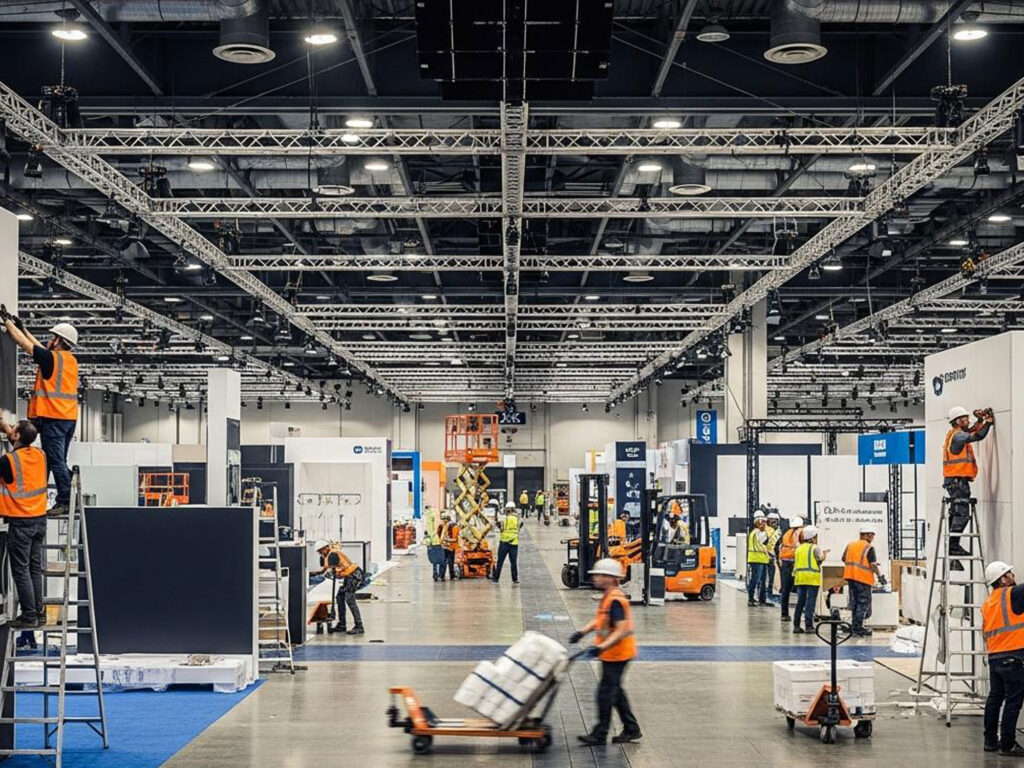
1. Navigating the Paperwork: Health, Safety, and Venue Rules
Before you are legally allowed to build anything in an exhibition hall, the venue requires proof that your stand is safe. This isn’t just a formality—it is a strict legal requirement.
• Risk Assessments and Method Statements (RAMS): You must submit detailed documents outlining every potential hazard of your build (working at height, heavy lifting, electrical safety) and exactly how your contractors will mitigate them.
• Structural Calculations: If your stand is over a certain height (usually 4 meters) or features a bespoke rigging structure, you will likely need technical drawings approved by an independent structural engineer.
• Public Liability Insurance: The venue will require proof of insurance covering both the build period and the live event days.
The Fret-Free Advantage: We handle 100% of the red tape. Our project managers draft the RAMS, coordinate with structural engineers, and submit all compliance paperwork for the build and derig to the event organisers well ahead of the deadline.
2. Power, Internet, and Rigging: The Invisible Essentials
The most beautiful bespoke stand in the world is useless if the lights don’t turn on. Venue services must be ordered carefully and accurately.
• Electrical Mains: You must order the correct electrical mains connection (single-phase vs. three-phase) based on the total power draw of your stand’s lighting, screens, and demo equipment.
• Wired Internet: Do not rely on venue Wi-Fi to run your lead capture software or live product demonstrations. Always order a hardwired, dedicated internet connection.
• Rigging: If you want a hanging banner to increase visibility, you must coordinate with the venue’s exclusive rigging contractor to secure it to the ceiling grid safely.
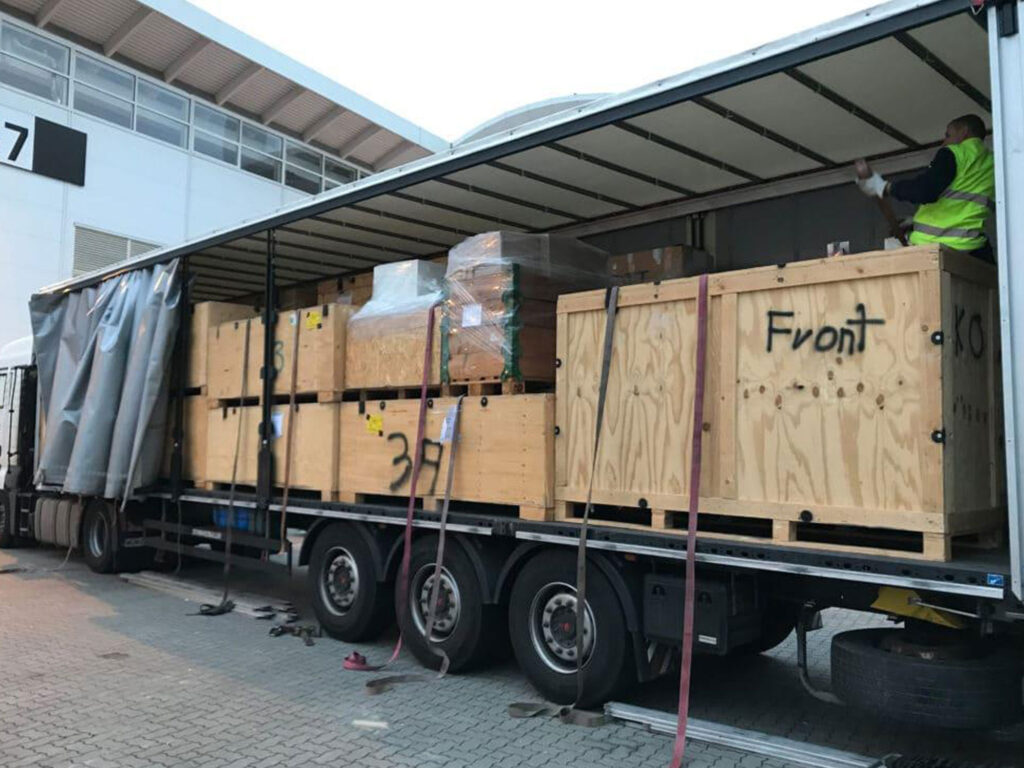
3. Shipping and Material Handling
Getting your graphics, modular frames, and product stock from your warehouse to your specific plot of carpet is often the most confusing part of the process.
Venues are highly chaotic during buildup. Delivery drivers are assigned specific, narrow time slots. If your freight arrives outside that window, they will be turned away.
The Master Exhibition Timeline
To avoid late-order surcharges and logistical panic, you need a strict operational schedule. Here is the framework we use to keep builds on track:
3 to 4 Months Out
Early Planning
Submit initial stand designs for show approval. Begin auditing electrical, internet, and water/waste requirements based on the confirmed design.
2 Months Out
Deadlines & Paperwork
Finalize and submit all RAMS (Risk Assessments, Method Statements and construction phase plans). Order all venue services (mains power, rigging, internet) before the early-bird deadlines expire to avoid hefty surcharges.
1 Month Out
Freight & Shipping
Book exact delivery slots with the venue’s traffic management system. Finalize shipping manifests and ensure all crates are clearly labeled with your booth number and hall.
The Build Days
Installation
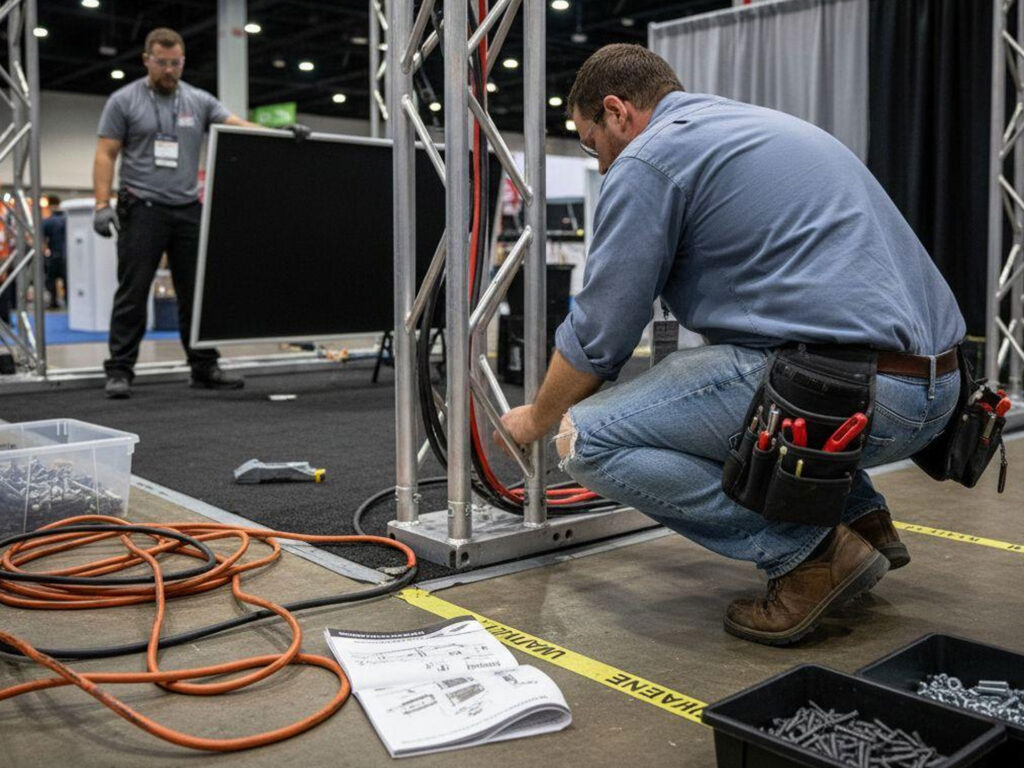
The installation crew arrives on-site. The floor is marked out, electrical mains are laid before the flooring goes down, and the structural build begins.
Key Takeaway: Outsource the Headaches
Exhibition logistics require a specialized skill set. A successful show is one where your sales and marketing teams arrive on the morning of day one, plug in their laptops, and start selling—completely oblivious to the weeks of coordination that made it possible.
By outsourcing the shipping, health and safety compliance, electrical ordering, and physical installation to a full-service partner like Fret Free Exhibitions, you eliminate the stress and protect your investment. Your only job is to focus on what matters most: growing your business.