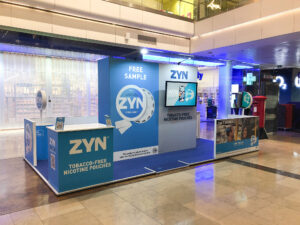
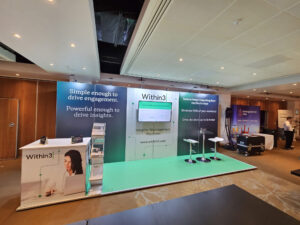
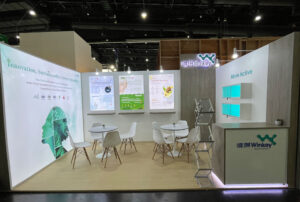
Imagine opening a high-end retail store in a dark, empty alleyway. No matter how incredible your products are, your sales will suffer if no one walks past the window.
The exact same principle applies to exhibiting. Your trade show booth location can make or break your entire event experience. While a stunning stand design is crucial for converting traffic, you first need to position yourself where the traffic actually flows.
At Fret Free Exhibitions, we see too many businesses rush to buy the biggest block of space available without looking at the context of the hall. Here is how to strategically analyze a trade show floor plan and choose a location that maximizes footfall, engagement, and ROI.

1. Do Your Homework: Analyze the Floor Plan
Before you even think about booth design, you need to study the venue blueprint. Event organizers usually provide a floor plan that reveals the anatomy of the show. Don’t just look for empty squares; look for the arteries of the event.
Key areas to map out:
• Main aisles vs. secondary aisles: Main aisles act like highways, carrying the bulk of the crowd.
• Seminar stages and keynote theaters: These create massive surges of traffic right before and after speaking sessions.
• Registration desks: This dictates where every single attendee will begin their journey.
By understanding the layout, you can anticipate exactly where crowds will naturally congregate and flow.
2. Why the Biggest Space Isn't Always the Best Space
It is a common misconception that buying a massive “Space Only” block in the center of the room guarantees success. In reality, stretching your budget to buy a massive footprint may leave you with insufficient funds to build a high-quality stand.
A general rule of thumb for exhibitors is to spend roughly one-third of their budget on the floor space, leaving the rest for the stand build, logistics, and staff.
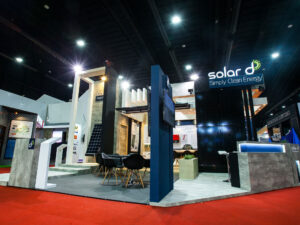
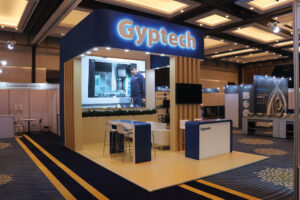
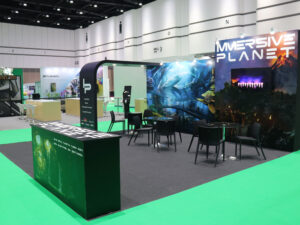
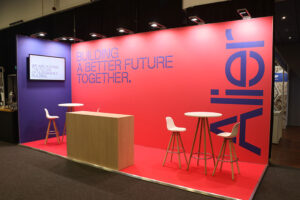
A compact, brilliantly designed custom exhibition stand in a high-traffic area will always outperform a sparse, cheaply furnished mega-booth tucked away in a dead zone. Choose a size that perfectly accommodates your goals (e.g., product demos vs. intimate meetings) while leaving plenty of budget for the actual brand experience.

3. Strategic Placement: Finding the "Goldilocks" Zone
Not all foot traffic is created equal. You want attendees when they are energized, open to conversation, and ready to engage.
The Entrance: Close, But Not Too Close
While being right at the front door guarantees views, it doesn’t always guarantee engagement. The immediate entrance area is often chaotic; attendees are orienting themselves, putting away coats, and trying to escape the bottleneck.
• The sweet spot: Position yourself just a few rows back from the entrance. Attendees will have had a moment to relax and will be highly engaged as they begin exploring.
Intersections and Corners
If you want maximum exposure, aim for the crossroads. Corner booths provide dual aisle exposure, meaning you can attract visitors from multiple angles. Because trade shows are laid out in grids, attendees constantly have to turn at intersections, making them high-visibility zones.
Adjacent to the Perks
Strategic placement near cafes, networking lounges, or charging stations is brilliant. Attendees naturally gravitate to these areas to rest and grab a coffee, giving you a captive, relaxed audience. However, make sure you have a slight “buffer” zone so you aren’t fighting with the physical lines for food or restrooms.
The Competitor Proximity Strategy
Should you set up shop next to your biggest competitor? It depends. If you have a superior product or a breathtaking bespoke stand that will clearly outshine theirs, being close by allows for direct comparison.
If you want to avoid them spying on your messaging, place your booth on a different main aisle. Alternatively, setting up near “hallmark” booths—major event sponsors or industry giants—can help you catch the overflow of their massive crowd.
The Fret-Free Advantage
Choosing the right space is a strategic game of chess. If you aren’t sure which plot of carpet will yield the highest return, Fret Free Exhibitions can help. We assist our clients in reviewing event floor plans, identifying the high-value traffic zones, and avoiding the dreaded “dead ends” (like spots near loading bays or fire exits.
Once you secure the perfect plot—whether it’s a high-exposure island space or a strategic corner—we design scalable, modular, or bespoke exhibition stands perfectly tailored to maximize every square inch of your specific location.
Key Takeaway: Strategic placement dramatically impacts foot traffic. Analyze the floor plan, identify the natural flow of attendees, and prioritize prime real estate over sheer size.
Missed Chapter 1?
Choosing the right location is just one part of a successful exhibition strategy. If you haven’t already, read Chapter 1: Setting Clear Goals and Budgets for Your Next Exhibition to make sure your objectives and budget are in place before you start planning your stand space.
Ready for Chapter 3 on Mastering Logistics?